


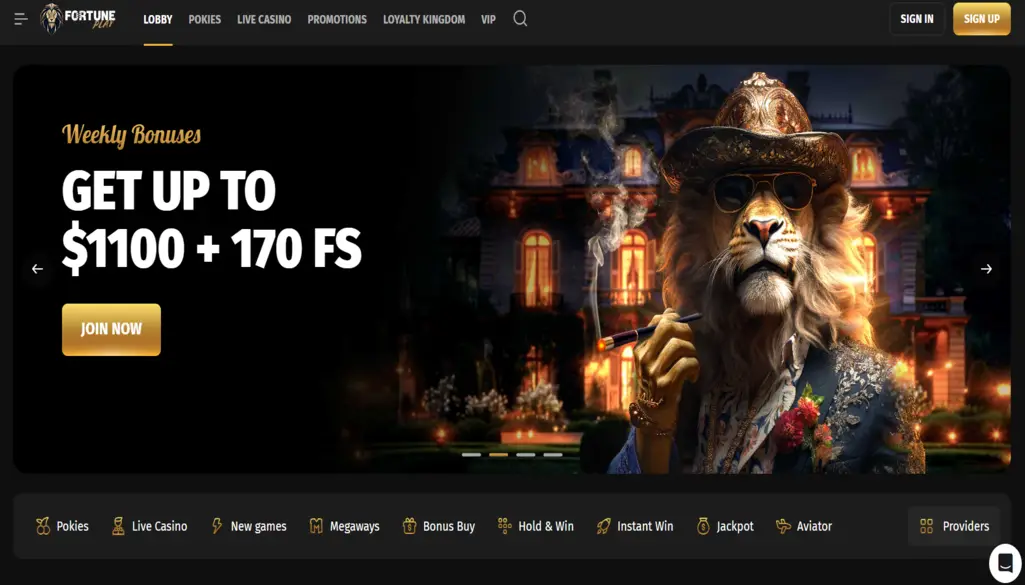
When a lobby contains thousands of titles, the main challenge is not spotting something attractive; it is understanding what each category actually tells you. Fortune Play presents casino games through several groupings, providers and themed collections, so a deliberate browsing method can save time and reduce unsuitable choices. The key is to separate game type, feature style, studio, popularity and availability before opening a title. This approach is especially useful when moving between slots, jackpot games, table games and live dealer sections.
Start with the lobby’s broad game families
The first navigation decision is usually the type of game you want to examine. The lobby groups titles into Pokies/Slots, Jackpot, Bonus Buy, Megaways, Instant Win, Drops & Wins, Hold & Win and Table Games. These labels are useful starting points, but they describe broad formats rather than guaranteeing a particular playing experience. For example, two Hold & Win titles can have very different rules, bonus symbols and pacing.
Slots are likely to offer the widest choice, while jackpot games may include titles where prize mechanics are central to the presentation. Bonus Buy is a particularly important filter because it identifies games with a feature-purchase option where available; it does not mean every player must buy a bonus. Megaways describes a changing-ways mechanism used by some releases, whereas Instant Win games generally use shorter rounds and simpler presentation.
Collections such as Classic Slots, Book Slots, Mythology, Fruit Slots, Asia and Vikings are better understood as theme-based shortcuts. They can help narrow a large catalogue when you know the atmosphere or subject you prefer, but the theme says little about volatility, paylines, maximum win or feature frequency. Treat each category as a sorting tool, then open the game information before deciding whether its mechanics suit your budget and attention span.
Use filters to narrow the choice without assuming too much
After choosing a broad family, use the lobby’s search, provider navigation and collections to reduce the number of results. Searching by title is useful when you already know a release. Provider browsing can help locate familiar studios such as Pragmatic Play, Play’n GO, NetEnt, BGaming, Hacksaw Gaming or Evolution, although a provider name should not be treated as a quality guarantee.
The lobby also highlights new and exclusive releases, popular titles and individual games with their studios displayed. These sections can be convenient, but they may reflect the site’s current merchandising rather than an objective ranking. A “popular” label does not establish better odds, and a “new” label does not mean a game is more suitable for a first-time player. Use these areas for discovery, not as a substitute for reading the game panel.
Availability can vary according to market and provider restrictions, so a title mentioned in a review or seen in a general catalogue may not appear for every account. If a search produces no result, try the provider filter, a shorter title search or the relevant theme. Do not assume that an unavailable game will return later, or that a similarly named release has identical rules. Confirm the exact title and studio shown in the lobby.
Check the information panel before opening a round
A useful lobby check begins with the game’s own information area. Look for the paytable, symbol descriptions, paylines or ways to win, bonus triggers and any special feature conditions. These details explain how a win is formed and whether a feature depends on scatters, wilds, multipliers, collecting symbols or a particular number of rounds. If the information is difficult to find, that is a reason to pause rather than guess.
Pay attention to the difference between the visual theme and the mathematical structure. A colourful title may still have a high-variance design, while a simple classic slot may produce more frequent but smaller outcomes. Short observation or demo play cannot prove the long-term return or volatility of a game. It can show how the interface works, but it should not be used to predict results or promise a particular outcome.
Before selecting a title, record the details that matter to your decision: minimum and maximum stake, whether bonus purchases are available, the relevant paytable and any displayed return or volatility information. If a game is unavailable in your jurisdiction, has unfamiliar mechanics or presents unclear rules, choose another title. The Gambling Helpline’s information for New Zealanders is also a useful reminder to keep gambling as entertainment rather than treating game selection as an income strategy.
Keep live tables separate from ordinary casino browsing
Live casino navigation deserves its own check because it is not simply another slot category. The live area includes sections such as Blackjack, Roulette, Baccarat, Poker and Game Shows, alongside popular tables and other live games. The format normally involves a streamed dealer or studio presentation, so table limits, seat availability and game pace may differ from the instant interface used by standard casino games.
When comparing live tables, first identify the game variant rather than relying only on its name. Roulette 1, Roulette 9 The Club and Lightning Roulette may not use identical rules or feature structures. Similarly, Speed Baccarat and standard baccarat can differ in pace and presentation, while game shows such as Crazy Time and Mega Wheel are distinct from conventional table games.
Check the table information, stake range and any displayed rules before joining a session. A popular table may be busy, and a faster format can lead to decisions being made more quickly than planned. Sports betting and esports are also listed elsewhere on the wider site, but they are separate from the casino lobby. Switching between these areas should not blur different budgets, limits or records of play.
Build a repeatable route through the lobby
A simple browsing route makes the lobby easier to manage. Begin with the game family, narrow by theme or provider, open two or three candidate titles, and compare their rules before making a choice. This is more reliable than scrolling through a homepage until a striking image catches your attention. It also helps prevent a promotional label, trending section or familiar studio from making the decision for you.
Use a short checklist for every candidate:

- Format: identify whether it is a slot, jackpot, table game, live title or instant game.
- Mechanics: read the paytable, feature rules and any bonus-buy explanation.
- Cost: check the available stake range and choose a planned amount.
- Availability: confirm that the exact title is offered for your market and account.
- Exit point: decide when you will stop browsing or playing before starting.
Once the checklist is complete, avoid repeatedly changing categories because of near-misses or attractive animations. If you cannot explain the basic rules in your own words, the title has not passed the navigation stage. A well-organised lobby should help you make a measured choice; it should not pressure you into opening more games. Save unfamiliar titles for later research rather than treating every recommendation as an invitation to play.
Which lobby questions should you ask first?
What is the difference between a category and a theme?
A category describes the game’s broad format or mechanics, such as Slots, Megaways or Table Games. A theme describes its setting or visual style, such as Mythology or Vikings. A themed collection can contain games with very different volatility, features and stake ranges, so always inspect each title individually.
Does a popular game offer better chances?
No. A popularity label indicates that many visitors are viewing or selecting a title, not that it has better odds or more favourable rules. Check the game’s paytable, displayed statistics and feature conditions instead. Popularity can guide discovery, but it cannot establish suitability, value or likely results.
Should live games and slots use the same budget?
Not automatically. Live tables may have different pacing, stake ranges and decision demands from slots. Keeping separate limits can make the difference between planned entertainment and unstructured spending. Review the rules and minimum stakes for each format, then use only an amount decided before browsing or playing.